It is about who can see it
Facebook has the most layered audience settings of any platform here: public, friends, friends except a list, specific people, group members, and age limits on top. Only the first is reachable from a plain link.
Paste a public Facebook video, Reel or Watch link and SniffVid asks the parsers for the media behind it. Facebook is the strictest platform here about who may see what, so the address is rarely the problem — the audience setting almost always is.
Illustrations show the workflow. Available formats and tracks depend on the actual result.
SniffVid TeamPublished Last reviewed
Paste a link above to see every available video, audio and cover download.
By using SniffVid you agree to our Terms of Service and Privacy Policy
These points describe the current download workflow. See the page-specific verification note below for what was checked; upstream availability and returned tracks can change.
Facebook has the most layered audience settings of any platform here: public, friends, friends except a list, specific people, group members, and age limits on top. Only the first is reachable from a plain link.
Facebook never consolidated video. A clip can live on Watch, as a Reel, inside an ordinary post, on a Page or inside a group — each with a different address and a different audience.
When a public video does resolve it normally arrives with picture and sound already together, so saving is a single click rather than a merge.
Tap Share under the video and choose Copy link, or copy the address bar while the post is open. Take the address of the video or Reel itself, not of the feed, profile or group around it.
Paste it above and press Get Download Links. An empty result usually means the video is not public, which you can check by opening the link in a signed-out browser window.
One finished file saves directly, on a phone as well as a desktop. If complementary video and audio tracks come back instead, select both and merge them in a desktop browser.
Those are the shapes worth pasting. SniffVid accepts any other public http(s) link too — whether it resolves is up to the source, so a profile, a search page or a private post simply comes back empty.
Keep your own work as a file that does not depend on the audience setting staying as it is.
Public Page videos are the most reliable shape on Facebook: the audience is set to everyone and the address tends to stay put.
A finished file on your own device beats one more scroll through a feed you do not control.
Save what you have the rights to use, then review it on your own disk, where a change of audience setting cannot take it away.
Every platform here has some notion of private content, but Facebook has the most layered audience settings by a wide margin: public, friends, friends except a list, specific people, group members, and age limits on top of all of them. Only the first is reachable from a plain link. That is why a Facebook address that looks perfectly correct comes back empty far more often than the same kind of link on YouTube or TikTok — the address is rarely what is wrong.
Copy the address of the video itself. A Watch page and a Reel each have one, and so does an individual post that carries a video. What does not work is the container: a profile, a group, a Page or a feed each hold many videos and point at none of them in particular.
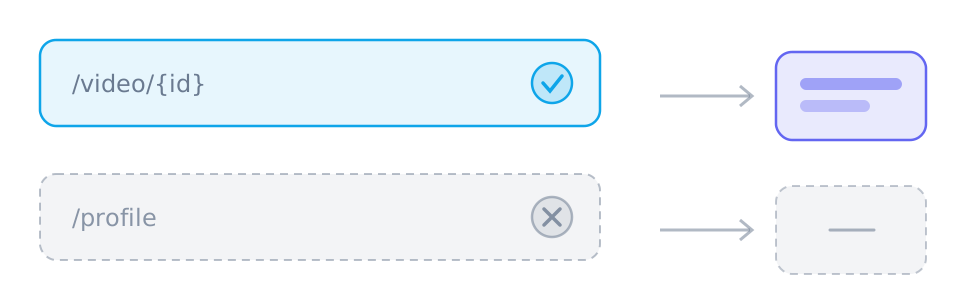
Facebook never consolidated video into one place, and the surface a clip lives on says something about who can see it. Watch is Facebook's video destination and is usually public. A Reel is short and public by default. A video inside an ordinary post inherits whatever audience that post was shared with. And a video inside a group is limited to members, which no public link can reach.
A public Facebook video normally arrives as one finished file with picture and sound together, so the ordinary outcome is a single save that works on a phone as well. Two complementary tracks are the rarer outcome and need a desktop browser to merge. Live broadcasts are the exception: a stream has no finished file, so there is nothing to return until it ends and is kept as a video.
The quickest test costs nothing: open the link in a private or signed-out browser window. If Facebook shows you the video, the address is genuinely public and a parser has a chance at it. If it shows a sign-in wall instead, that is exactly what the parser sees too, and no amount of retrying will change it. This one check settles most Facebook failures before they happen.
Naming these is more useful than letting them turn into a wasted visit. There is no way past an audience setting or a login wall, no access to group or friends-only video, no capture of a live broadcast, no bulk download of a Page, and no editing of what comes back — no upscaling, no re-encoding, no watermark removal and no trimming.
If Facebook will not show the video to a browser that is not logged in, it will not show it to a parser either. That single check settles most empty results here.
Media links from SniffVid expire after fifteen minutes, so parse again if one has gone cold. When Facebook itself will not serve the video, re-parsing will not change the outcome.
Files are saved exactly as the source served them — no cropping, rotating, reframing or added borders, and no quality that was never on offer.
These tables are shared across the site, so a figure you saw on one page is the figure you see here.
| When the platform… | The result panel shows | What you do |
|---|---|---|
| Serves one finished file | A single track with picture and sound already together | Use the offered save action without merging; completion still requires readable media and a supported browser. |
| Splits picture and sound | Two lists: video-only tracks and audio-only tracks | Choose one complementary track of each kind and merge in a supported browser; phones may have storage or memory limits. |
| Needs relaying or blocks browser reads | The same tracks, routed through a short-lived relay link | YouTube and X use relaying by default; merging chooses a transport automatically. For other single-file results, try the relay button if offered. |
| Task | Desktop | Phone | Why |
|---|---|---|---|
| Download a public link | Depends on source/browser | Depends on source/browser | Requires readable media from a provider; the parser does not inherit your platform login. |
| Download a private, paid or DRM-protected video | No | No | The source never hands the media to an anonymous reader, so there is nothing to copy. |
| Save one track | Depends on source/browser | Depends on source/browser | Requires a readable media file and browser saving support; a manifest alone is not a complete file. |
| Merge two tracks into one MP4 | Depends on source/browser | Depends on source/browser | Uses a save picker or temporary browser storage; browser support, quota and memory determine availability. |
| Convert between formats | No | No | No decoding or re-encoding: single files keep their supplied format, while compatible track pairs can be remuxed into MP4. |
| Remove a watermark | No | No | The file is the platform's own copy; nothing is edited or re-encoded on the way through. |
Reviewed the current Facebook-facing parsers and the result panel, alongside the video address shapes Facebook issues. Because a video can be public to friends and closed to everyone else, this page explains how visibility decides the outcome rather than claiming a result for every link.
Written and reviewed by SniffVid Team, the people who build and run SniffVid. Guides answer practical questions and are updated as capabilities change. Product promotions are labeled separately. Read the editorial policy
Published · Last reviewed · Content last reviewed
Primary documentation for the claims on this page. Nothing here cites another downloader as an authority on how downloads behave.
Choose another platform page, or try a public media link in the downloader. Availability depends on the parsing service.
SniffVid is an independent tool. It is not affiliated with, endorsed by or sponsored by Meta Platforms, Inc., Facebook or any of their affiliates. All trademarks belong to their respective owners.